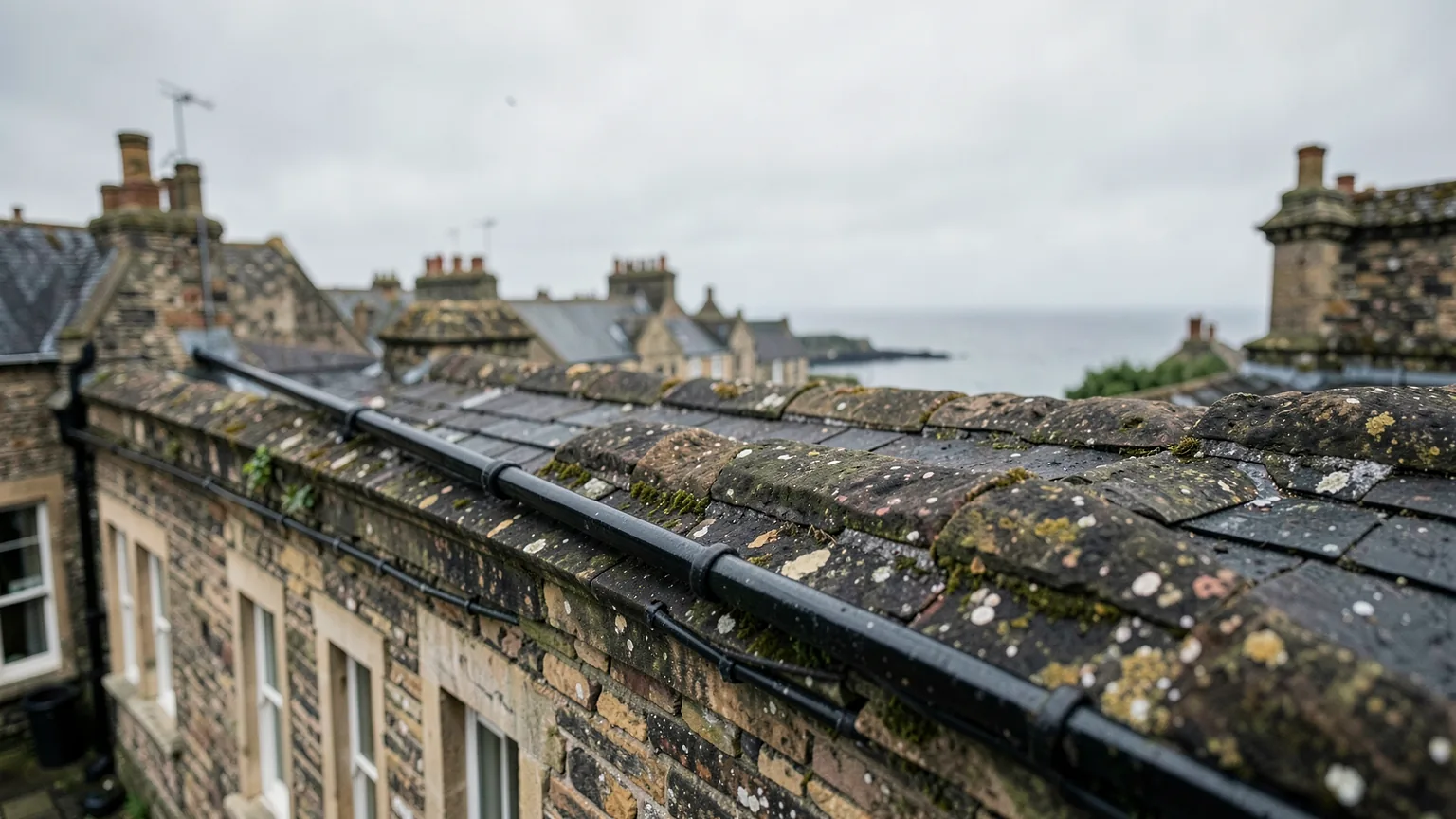
Why gulls and pigeons settle on Portsmouth buildings
Gulls and pigeons settle on Portsmouth buildings because the city offers what they need: flat or low-pitched roofs, ledges, chimneys, gutters and wide open views over the harbour and the seafront. Once birds establish a site, they tend to return to it year after year. The result for a property owner is usually a combination of nesting, droppings, noise and blocked drainage, and the sensible response is a planned set of deterrents rather than a single emergency visit. This guide explains why the problem develops, what the law expects of anyone managing it, and which options are proportionate for homes and commercial premises in Portsmouth.
Why these birds favour city roofs
Herring gulls and lesser black-backed gulls have adapted well to towns. Coastal cities provide food from bins, takeaways and shopping streets, while roof spaces give safe places to raise chicks away from ground predators. Pigeons follow a similar pattern, drawn to spilt grain, bread and food waste and to sheltered ledges under eaves and inside disused vents. Parapets, flat felt roofs and the gaps behind fascias are often the first places to be claimed.
Property owners in older terraces in the Old Portsmouth and Southsea areas tend to notice the problem first at the roofline, where Victorian and Edwardian brickwork offers many small crevices. Newer commercial units with flat roofs and large plant areas can be just as attractive, because the open top surface makes an ideal nesting platform and a place to loaf.
Nesting seasons and typical behaviour
Gulls usually begin to nest in spring and their activity peaks in late spring and early summer, when chicks are present. Their noise can be loudest at dawn and during the evening, and parent birds can be aggressive when they feel a nest is threatened. Pigeons are less seasonal and may breed for most of the year, which means that a deterrent installed in one month can need checking again later.
Because nest activity changes through the year, a useful first step is to record when birds arrive, which parts of the building they use and where the droppings build up. A simple log of dates and locations gives a technician the information needed to choose the right deterrent and to time any work so that it does not disturb an active nest.
Fouling, gutter blockage and the cost of neglect
Droppings are the most visible consequence. Acidic fouling can mark stonework, paintwork and car windscreens, and it builds up on walkways where people walk. The more serious problem is often out of sight. Nesting material, feathers and debris can block gutters and downpipes, so rainwater overflows and soaks into walls and fascias. Over time that moisture can cause timber decay and staining, and a small blockage that is cleared early is far cheaper to fix than a damaged roof edge that has been left.
The cost of managing these problems depends on how high the work is, how many access points there are and how much cleaning is needed. Those drivers matter more than any headline figure. A single-storey shop with clear access will normally cost less to proof than a multi-storey building with awkward parapets, and the price of clearing a heavily soiled roof rises when specialist cleaning is required. A written survey that lists each area, the access equipment needed and the cleaning scope is a clear way to compare like with like when you request quotes, because two proposals that look similar on paper can differ widely once roof access and cleaning are included.
Deterrents and proofing that work on roofs
Deterrents fall into a few broad families. Physical exclusion, such as netting or spikes, stops birds landing or nesting on a particular ledge. Wire systems can keep birds off wide flat surfaces. Visual and audible devices are generally less reliable on their own, because birds habituate to them quickly. The strongest approach combines exclusion with removing the food and nesting material that drew birds in the first place.
Proofing should also tackle the causes. Bins with loose lids, takeaway waste left on the pavement and grain spilt from deliveries all encourage pigeons and gulls to stay. Closing gaps around fascias and vents, and sealing unused openings, removes many of the places where birds build nests. Any work on roofs is a matter for competent contractors who use proper access equipment, and section 3 of the Health and Safety at Work etc. Act 1974 requires employers to conduct their work so that people who are not their employees are not exposed to risks to their health or safety, which covers roof work as well.
Monitoring after installation
A deterrent is only as good as its upkeep. Netting can sag or tear after strong winds, spikes can be knocked loose by maintenance crews, and wires can lose tension as building materials expand and contract. Birds also test new equipment, so a site that looks clear in the first week may need small adjustments later. Ask whether the proposal includes a follow-up visit and a simple check list covering each area treated, so that you can see at a glance whether anything has moved.
Monitoring also helps with timing. If activity drops in one area but increases on an untreated ledge next door, the birds are simply moving to the nearest suitable alternative. Recording these shifts allows a technician to extend the exclusion in a planned way, rather than adding equipment piece by piece after each complaint.
The law on birds, nests and eggs
Most wild birds are protected under the Wildlife and Countryside Act 1981. Section 1 makes it an offence to intentionally kill or injure a wild bird, and to take or destroy its nest while the nest is in use or being built. Destroying eggs is also an offence. The rules matter in practice because a nest that has not yet been used can still be protected once building has started, so a technician should check before any clearance.
The GOV.UK guidance on preventing wild bird damage says you do not need to apply for a general licence, but must follow its conditions. It also says herring gulls and lesser black-backed gulls cannot be killed under a general licence. The GL42 general licence covers killing or taking certain wild birds to prevent serious damage, for a land owner, occupier or authorised person. Its 2026 table lists feral pigeons only for protecting livestock feed and crops; for pigeons fouling a building, the relevant licence is usually GL41, which covers feral pigeons where the purpose is preserving public health or safety and its conditions are met. A property owner who wants to remove a nest or to take action beyond the general licence will generally need advice before doing so, and the safest course is to plan deterrents in the quiet months and to use exclusion rather than removal.
Why timing matters for shared buildings
Many Portsmouth buildings are split between flats, shops and offices, and birds do not respect those boundaries. A roof used by one tenant may overhang a neighbour's yard or a shared walkway, and a deterrent placed on one side can push nesting towards the other. Agreeing the work with everyone who shares the roof, and setting out who pays for each part, avoids the situation where one owner proofs their section only to find the problem has simply moved along the terrace.
Commercial sites face similar issues with delivery yards and bin stores at ground level. Gulls and pigeons feed where waste is accessible, so the same survey should look at the ground as well as the roof. A proposal that includes waste storage changes, such as lidded containers and regular collections, usually gives longer-lasting results than roof work alone.
Working with a technician in Portsmouth
When you ask for a visit, describe the symptoms in detail. Note the building type, the roof access, the species you believe are involved, the dates when activity is highest and any previous attempts to deal with the problem. A good technician will ask about nesting, check whether birds are actively using the site, and explain which deterrents are proportionate and lawful. They should also say what cleaning is needed and how the site will be checked after installation.
Trade bodies such as the British Pest Control Association publish information on pest management standards and on what professional practice looks like, which can help you judge a written proposal. The association describes its own role and membership on its website, so it is worth reading that alongside any quote you receive. Portsmouth City Council is the local planning authority for most building works, so if a deterrent involves altering a listed or conservation-area building, check with the council before work starts.
For a practical start, plan a survey of the affected roofs, keep a short log of bird activity and ask for a written proposal that separates exclusion, cleaning and ongoing monitoring. You can send those details through the quote request page, or read about the range of treatments offered on the services page. If you are still unsure where to begin, the general questions page answers common queries, and the guide on preparing for a pest visit explains what to clear and tidy before a technician arrives.
Sources and further reading
- Health and Safety at Work etc. Act 1974, section 3 (legislation.gov.uk)
- Wildlife and Countryside Act 1981, section 1 (legislation.gov.uk)
- Wild birds: prevent damage to your land, farm, fishery or business (GOV.UK)
- Wild birds: licence to kill or take for public health or safety (GL41) (GOV.UK)
- Wild birds: licence to kill or take to prevent serious damage (GL42) (GOV.UK)