Lawful bird management for Portsmouth property owners
Pigeons and gulls can foul roofs, shopfronts and gutters, and the wish to stop nesting is understandable. The difficulty is that wild birds are protected by law in England, and the methods that feel most effective, such as removing a nest that holds eggs or young, are often the ones that break the rules. This guide explains which birds and nests are covered, which deterrents are usually lawful, where the limits lie and when a licence is needed before any lethal control is considered.
What the law protects
The Wildlife and Countryside Act 1981 gives wild birds broad protection. Section 1 makes it an offence to intentionally kill, injure or take any wild bird, to take, damage or destroy the nest of any wild bird while it is in use or being built, or to take or destroy its eggs, and gulls and pigeons are covered like any other wild bird. A separate offence protects the rarer species listed in Schedule 1, which must not be disturbed, intentionally or recklessly, while building a nest or when in, on or near a nest containing eggs or young. Under section 21 of the Act these offences can lead to up to six months' imprisonment, an unlimited fine, or both, a penalty Natural England repeats in its guidance on individual bird licences, which is why a property owner should check for active nests before clearing a ledge.
Birds in England are protected as a general matter. The GOV.UK guidance on preventing bird damage states the rule directly: you cannot kill or capture wild birds, or damage their eggs or nests, to solve a problem they cause, unless you follow the conditions of a licence. A licence is therefore the gateway to any lethal control, and it must be followed exactly.
Non-lethal control comes first
The starting point is non-lethal management. The same GOV.UK guidance says you should try to scare birds away using visual or audible devices, restrict access to food, stop birds roosting or nesting on buildings by putting netting over vulnerable areas, and use physical barriers. It also notes that birds become used to particular methods, so a range of methods that are changed regularly works better than one device left in place.
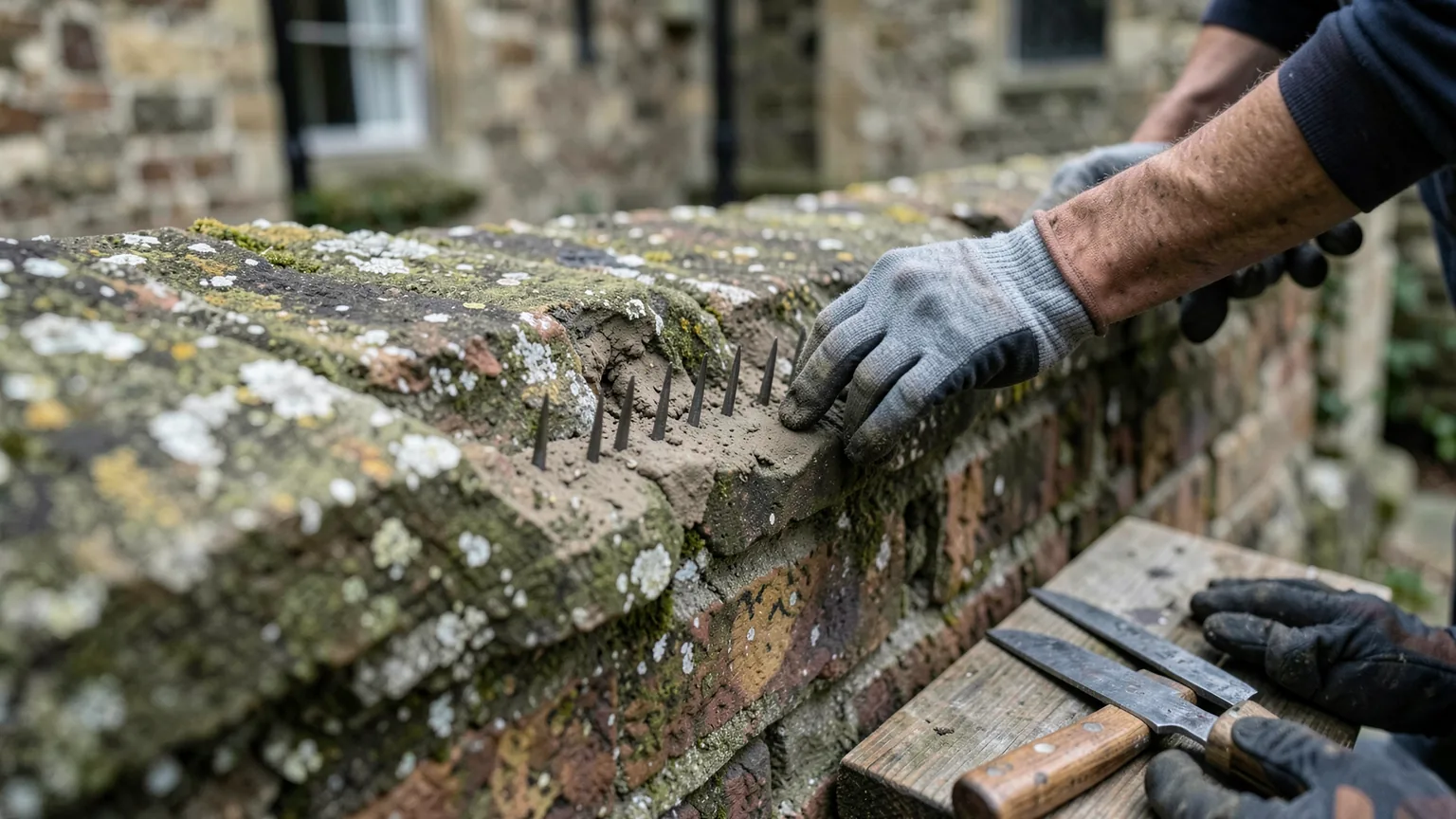
Natural England's advice note on legal measures sets out the methods that can be used to deter certain wild birds without a licence. That advice note, reference WML-GU01, is the place to check which deterrents are permitted for the birds you are dealing with. Physical deterrents such as spikes, netting and wires should be fitted so that they do not trap or injure birds. A deterrent that a bird can become entangled in is a welfare problem as well as an offence risk.
Removing food sources is the other lawful lever. Birds are drawn to food left out for them, whether deliberately or carelessly. Closing refuse containers, clearing spilled food from outdoor eating areas and not feeding birds near a building reduce the reasons for birds to settle. This step costs little and often makes physical deterrents more effective.
When a licence is needed
When non-lethal methods fail, the GOV.UK guidance says you might need to combine non-lethal methods with lethal control methods, and that is when a licence becomes relevant. Natural England issues general licences for specific purposes. Licence GL42 allows certain species to be killed or taken to prevent serious damage. Its licence page explains that the licence is used by a land owner, occupier or authorised person, and the birds you may control are listed in a table in the licence itself. GL41 covers killing or taking certain species to preserve public health or safety; the version valid for 2026 lists Canada goose, feral pigeon, jackdaw and monk parakeet, so feral pigeons on a building can fall within it where the purpose and every condition are met.
A general licence is not a free-for-all. GL41 does not need an application in advance, but its conditions must be complied with, and both licence pages set out restrictions designed to reduce disturbance to birds. Before acting, confirm that your target species is listed, that the purpose matches one the licence covers and that every condition, including any restriction on timing, will be met. If the activity falls outside a general licence, an individual licence is needed.
Gulls are the main example in Portsmouth. The GOV.UK guidance states that herring gulls and lesser black-backed gulls cannot be killed under a general licence, so lethal control, including taking their eggs or active nests, needs an individual licence (A08 or A09) from Natural England. The same individual licence guidance says that a licence will not be granted to prevent a public nuisance or inconvenience such as noise, swooping, food theft or droppings, or to protect property from damage, unless there is a serious risk to public health or safety, and that a decision usually takes up to 30 working days.
Permission matters too. The GOV.UK guidance explains that you need the landowner's permission to carry out these activities on land or premises you do not own or manage, and that work on or near a site of special scientific interest may need consent from Natural England.
Nests, eggs and timing
Removing a nest is the step most likely to cause an offence. Where a nest is in use, or holds eggs or young, it must be left alone. Where a nest is blocking a flue or gutter, the situation needs prompt professional advice, because the response has to balance a real safety risk against the legal protection that applies to the birds. Keep a note of when nests were found and checked, so that you can show that work was not carried out on an active nest.
Records of control work
Keep a record of any control work carried out. Note the date, the location, the species involved, the methods used, the licence relied on if any and the name of the person who carried out the work. If an inspector or a neighbour later asks what was done, a clear record answers the question. It also helps the next person who manages the building understand what has been tried and whether it worked.
Working safely at height
Much bird control takes place on roofs, parapets and gutters, which means ladders, scaffolding or mobile access. Falls are a serious risk, and the work should be planned with a suitable access method and a clear view of the edges. A contractor who arrives with the right access equipment and a risk assessment is better placed to finish safely than one who improvises with a stepladder.
Waste and gulls on commercial premises
Gulls are most often a problem around commercial premises where waste is left exposed. Bags on the pavement, open skips and food scraps in yards give birds an easy meal, and a regular feed becomes a reason to return. Securing waste in lidded containers, collecting it on a fixed schedule and cleaning up spills are steps the business controls directly. They do not require a licence, and they often make physical deterrents work better, because birds have less reason to stay.
Rotating deterrents
Birds become used to any single deterrent, so a fixed device often stops working after a few weeks. The GOV.UK guidance on preventing bird damage recommends a range of methods that are regularly changed to overcome habituation. In practice, that might mean moving a visual deterrent, changing the position of a fixed barrier or adding a sound device for a short period. Note what was changed and when, so that you can see which measures had an effect.
Checking the legal deterrents
Natural England's advice note on legal measures for managing wild birds (WML-GU01) is the right document to check before fitting a deterrent to a building that birds use. It describes the methods that can be used without a licence, so a deterrent chosen from that list is less likely to cause a problem later. Keep a copy of the note with the maintenance records for the building.
Where a building in Portsmouth is near a source of food, such as a takeaway, a bin store or an open market area, a survey that looks at that food source as well as the roof is a practical starting point.
The site's guide to the law on traps and poisons covers the welfare duties that apply to any animal trapped during control work. To compare contractors for bird control, request a quote with the building details, the species seen, where birds are nesting or roosting and whether any nests are active. Include any safety concerns, such as a blocked flue. The pest control services page gives an overview of the range of work offered, and the local areas covered by this site are listed for reference. Quote details go to local firms; the site does not carry out any work itself, and how this site works explains the process.
Sources and further reading
- Wildlife and Countryside Act 1981, section 1 (legislation.gov.uk)
- Wild birds: prevent damage to your land, farm, fishery or business (GOV.UK)
- Wild birds: licence to kill or take for public health or safety (GL41) (GOV.UK)
- Wild birds: licence to kill or take to prevent serious damage (GL42) (GOV.UK)
- Apply for an individual licence to kill, take or disturb wild birds (A08 or A09) (GOV.UK)