Droppings, noises and gnaw marks: rodent clues in Portsmouth
A scratching in the loft at night, a dark pellet under the sink and a small bite mark on a cardboard box can all be the first sign of rodents in a Portsmouth home. Most people hear or see something before they see an animal, and the clues are easy to misread. Rats and mice leave different traces, and the difference matters because the risks to health and the right response are not the same. This guide explains what each clue usually means, which health risks come with it and how to gather the evidence a pest service will want.
Droppings
Droppings are usually the most reliable clue. They are typically dark, small and pellet-shaped, and they tend to collect where animals travel and rest. Rat droppings are generally larger than mouse droppings, but size alone is not decisive, so note the number, the colour and whether the droppings look fresh or old. Fresh droppings are soft and dark, while older ones dry out and crumble. A cluster along a wall, behind a fridge or inside a cupboard usually shows a regular route, and that route is where the animals are moving.
The health risk is a good reason to handle droppings with care. The UK Health Security Agency explains that hantavirus infection follows exposure to infected rodent excreta, such as faeces or urine. The NHS adds that the virus is usually spread by breathing in or touching the poo, pee or saliva of infected rats, mice or voles. For that reason, droppings should not be swept dry. Wear disposable gloves, wet the area with disinfectant, leave it for a few minutes, then wipe it up with paper towels and seal them in a bag.
Gnawing, runs and smears
Gnaw marks reveal much about the animal. Fresh gnawing, with clean edges and pale teeth marks on soft material, indicates current activity, while dusty or weathered marks may be old. Look along skirting boards, at the corners of cupboard doors, around pipe entry points and on the edges of stored food packaging. Gnawing on electrical cables is a particular concern, because it can create a fire or electrical risk. Any sign of damage to wiring should be reported to a qualified electrician as well as to the pest service.
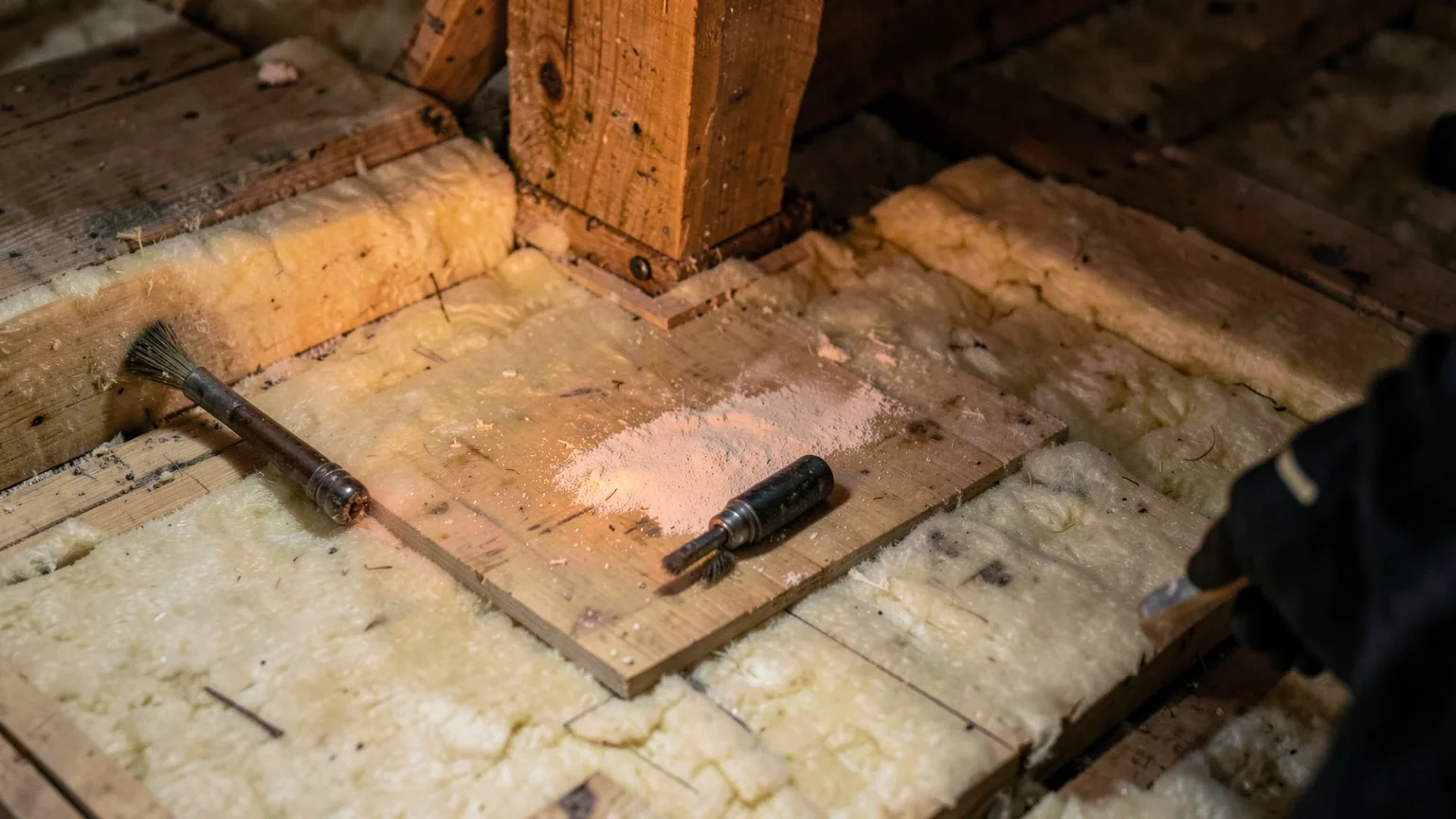
Runs and smears show the routes animals use. Greasy marks along a wall, often at the same height, are left as animals brush against the surface. A run is a worn path through dust or insulation. A light dusting of flour or talc across a suspected route will show footprints the next morning, which helps identify the species and the number of animals. Repeat the dusting over several days to confirm the route.
Noises in lofts and walls
Noises are harder to interpret, but they are often the first sign. The most useful approach is to note what you hear, when and where. Scratching, scuttling and gnawing in a loft or wall cavity usually point to animals moving along a regular path. Rodents are most active at dusk and during the night, so noises at those times are common. Animals also tend to stop abruptly when a room is disturbed, so a noise that falls silent when someone walks in is worth recording.
Other animals make similar sounds. Squirrels in a loft, birds in a gutter or a cat moving across the roof can all sound like rodents at night. If the noise is in a loft, check the insulation for runs, droppings and gnaw marks before concluding that rodents are responsible. A torch and a few minutes in the loft are often enough to tell the difference.
Leptospirosis and other risks
Droppings and urine are not the only concern. The NHS explains that leptospirosis, also called Weil's disease, is spread in the urine of infected animals, most commonly rats, mice, cows, pigs and dogs. The risk is higher for people who handle animals or work where contaminated water or soil is present. Anyone who has been bitten by a rat or mouse, or who develops a fever or aches after exposure, should contact a GP or NHS 111 promptly and mention the exposure.
Health risk also changes the sequence of work. Ventilate the area, avoid disturbing droppings in confined spaces and keep children and pets away until the area has been cleaned or inspected.
Why identification matters
Identification affects the treatment. Rats and mice respond to different baits and placements, and they nest in different places. A treatment that suits one may not suit the other, and a mismatch can leave the real problem in place. Proofing is affected as well. A gap a mouse can enter will not stop a rat, and mesh that is adequate for a mouse can be gnawed through by a rat. The survey should therefore establish the species, not only the presence of rodents.
For a householder, the simplest guide is to note the size and number of droppings, the location of activity and the type of noise, and to pass that information on. A pest service can then plan the visit properly.
Recording the evidence
Good evidence makes the survey quicker and the treatment more accurate. Photograph droppings with a coin or ruler for scale, record where each sighting was made and note the date. Keep a simple log of activity, particularly at night. Mark routes with dusting powder and check them over several days. The record helps the service decide where to place bait and traps, and it provides a baseline against which progress can be judged.
Do not try to catch or poison animals without advice. The GOV.UK guidance says you must only use traps that have been approved for the species you want to control, and follow the instructions for use. An animal that is trapped and left may suffer. The the law on traps and poisons sets out the welfare duties that apply to anyone who sets a trap.
When to act
Act as soon as the clues point to rodents, rather than waiting for the problem to become obvious. Early evidence is easier to deal with. If droppings are abundant, if gnawing is damaging wiring or pipes, or if anyone in the household has been bitten, arrange a professional visit without delay.
What to do once the evidence is recorded
Once you have recorded the evidence, stop adding to the problem. Leave food and waste in sealed containers, clear any clutter around the route you have marked and avoid moving stored items in a way that scatters droppings. Do not set a trap on a whim, because an animal caught without the right device or checks can suffer. If the problem is in a rented home, send the photographs and notes to the landlord in writing with the date, so there is a record of what you found when you reported it.
To get a survey, request a quote and describe what you have found: the size and number of droppings, where the gnaw marks are, the noises you hear and when they happen. Photographs help the contractor plan the visit. If you want the council to look at the problem, the report a pest problem page explains how to contact your local council. The pest control services page sets out the general work involved, the local areas covered by this site are listed for reference, and the checks before booking explains what to ask a provider before the visit. This site passes quote requests on and does not survey or treat anything itself.
Sources and further reading
- Hantaviruses (UK Health Security Agency)
- Hantavirus (NHS)
- Leptospirosis (Weil's disease) (NHS)
- Pest control on your property (GOV.UK)
- Report a pest problem (GOV.UK)